
Air cruise aboard a privatized aircraft – 100% Business Class
Latin American Odyssey
Cape Verde – Brazil – Argentina – Falkland Islands
Ecuador – Colombia – Cuba
21 days / 20 nights
From March 5 to 25, 2027
Overview
Latin Odyssey: from Bahia’s rhythms to the Andes’ peaks, the soul of a continent
Taking in the vastness of Latin America in a single journey is a privilege that only private aviation can offer. In March 2027, Ciels du Monde invites you on a “Latin American Odyssey”: a 20-day air cruise conceived as a symphony of cultures, rhythms, and grand landscapes.
From the inaugural stopover in Cape Verde, a historic bridge to the New World, to the legendary shores of Havana, each stage is a celebration of the art of living and Latin diversity. You will cross the Atlantic to discover the mystique of Salvador de Bahia, the architectural genius of Brasília, and the raw power of the Iguaçu Falls. This exclusive journey will take you from the elegant boulevards of Buenos Aires to the pre-Columbian treasures of Bogotá, without forgetting the natural sanctuaries of the Galápagos or the icy magic of El Calafate.
Aboard our aircraft fully privatized in Business Class, you will travel with complete ease, freed from logistical constraints so you can better absorb the energy of this vibrant continent. More than an exceptional itinerary, this odyssey is an invitation to feel the heartbeat of Latin America, between colonial heritage, untamed nature, and contagious passion.
Highlights of the journey
The unforgettable experiences of your odyssey: between wild nature and Latin heritage
- Exploration of a salt mine nestled in the crater of a volcano in Cape Verde
- Immersion in the Afro-Brazilian energy and colonial splendors of Salvador de Bahia
- A striking spectacle of the raw power of the Iguaçu Falls
- An elegant stopover and art of living in the historic districts of Buenos Aires
- Discovery of the unusual Port Stanley, the southernmost capital city in the world
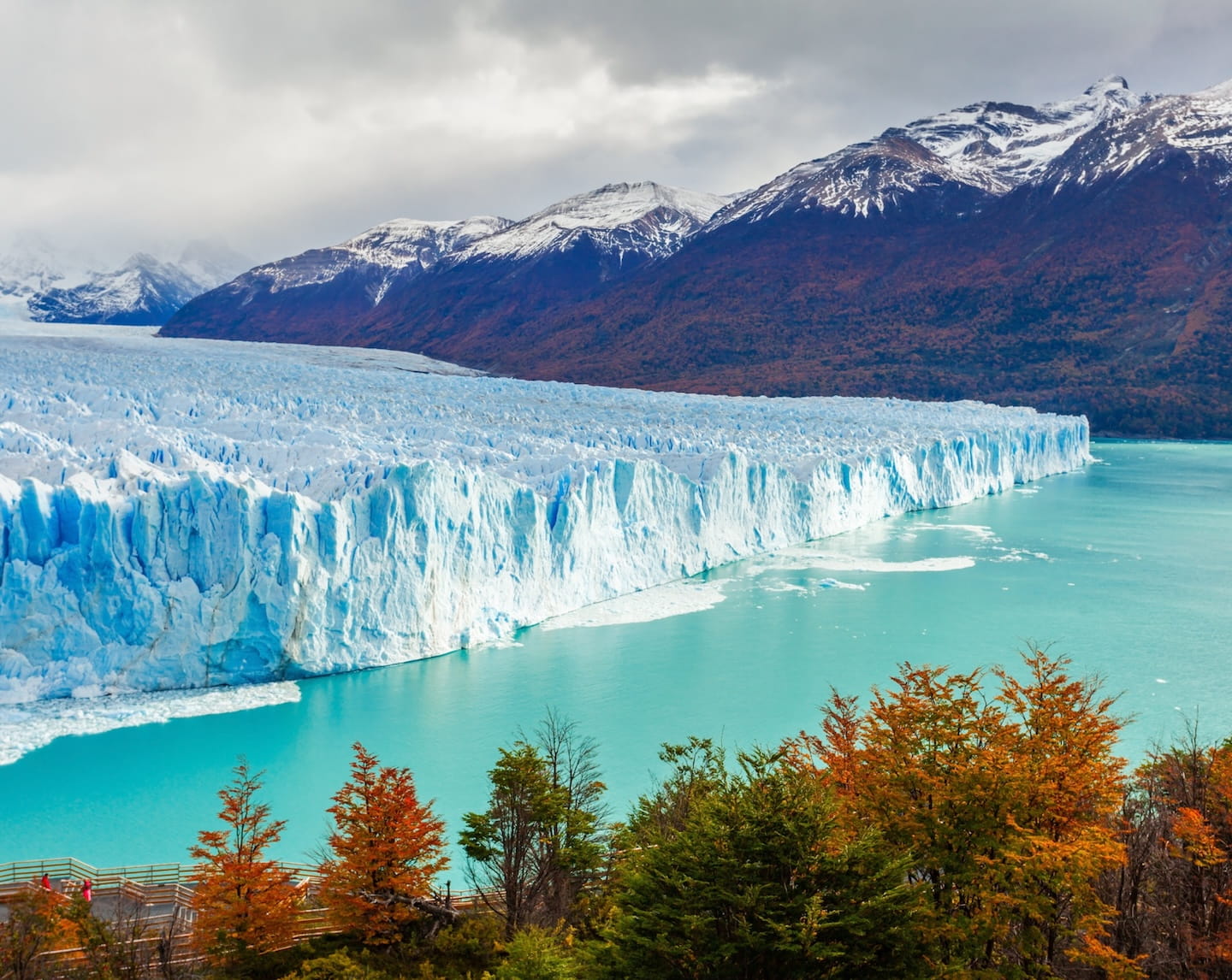
- Wonder at the magic of Patagonia’s millennia-old glaciers in El Calafate
- Encounter the unique biodiversity of the Galápagos natural sanctuary
- Visit to the Salt Cathedral in Bogotá
- Ride in a classic car along Havana’s legendary Malecón
These highlights will be scheduled during your trip according to speakers’ availability, weather conditions, and local constraints (public holidays, etc.), but will be carried out in one way or another except in cases of force majeure.
In pictures
A journey to live and feel: the album of your future emotions
With Ciels du Monde, you do not visit a country—you meet it!
Programme
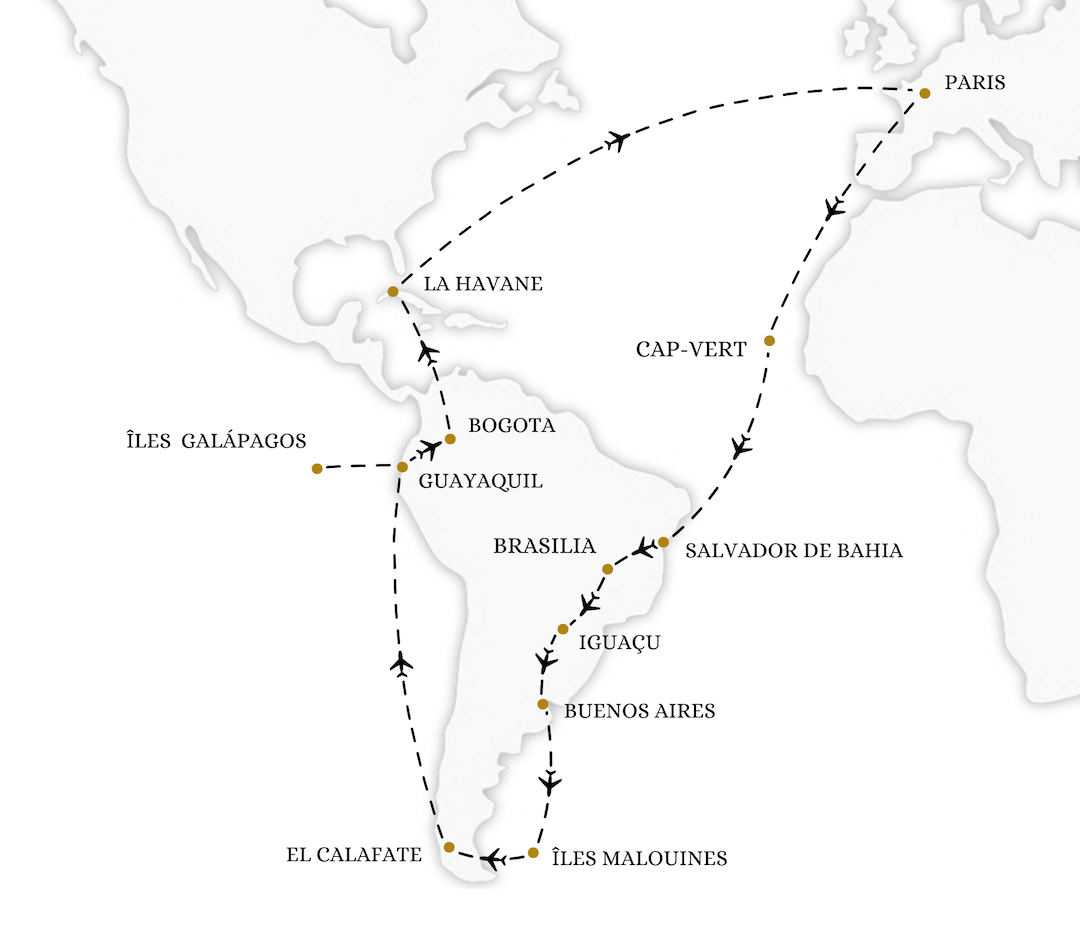
In Paris, in the morning, you meet the entire travel team before flying to your destination.
Day 1–2
Between volcanic craters and the rhythms of morna
Flight time: Paris – Cape Verde 6h
Aboard our privatized aircraft, our 21-day aerial odyssey across Latin America takes flight. But before reaching the shores of the New World, a first stopover is almost inevitable: Cape Verde, an African sentinel set in the heart of the Atlantic.
A volcanic archipelago shaped by winds and ocean, Cabo Verde reveals landscapes of striking mineral beauty. Here, Portuguese blends with Cape Verdean Creole, while this singular culture resonates everywhere—born over centuries from the meeting of Africa, Europe, and the Americas. This stopover is no coincidence. For centuries, the Cape Verde islands were a strategic passage on the great Atlantic routes. Navigators, explorers, and merchants stopped here before the long crossing to the New World. In our turn, we follow this legendary route toward South America.
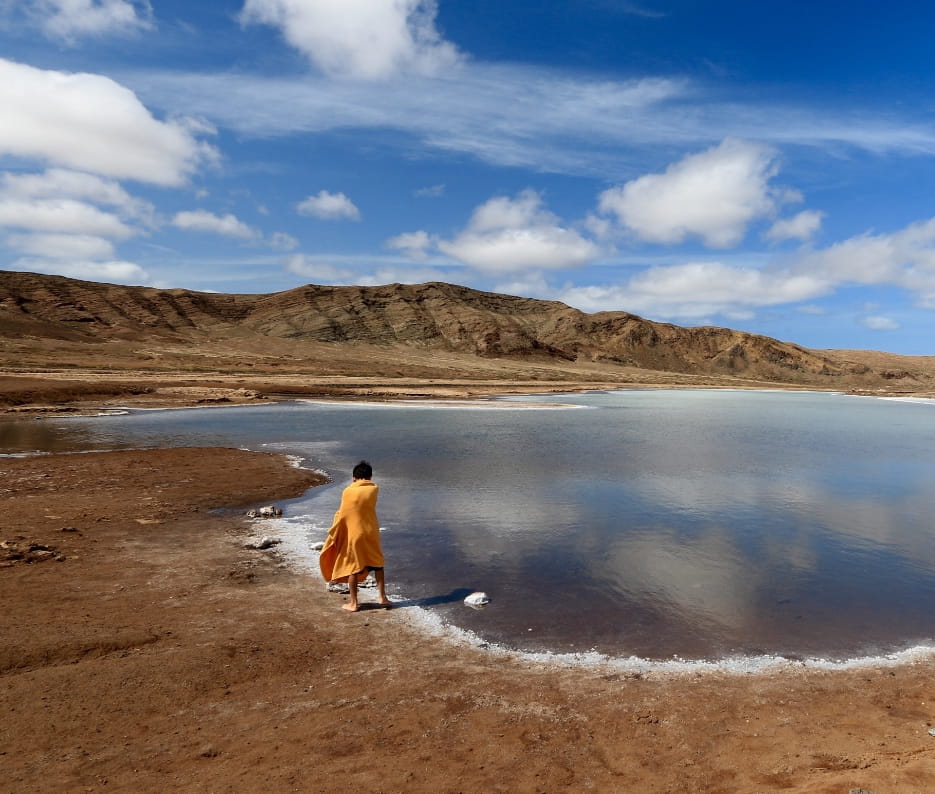
On Sal Island, nature has composed a spectacular setting. At the heart of the crater of an ancient volcano lie the salt pans of Pedra de Lume, a surprising inland sea with shifting reflections, long exploited for its precious salt.
Further north, the desert expanses of Terra Boa hold one of the island’s most fascinating natural curiosities: under the effect of heat and light, the horizon blurs and reveals the perfect illusion of a lake set in the middle of the desert.
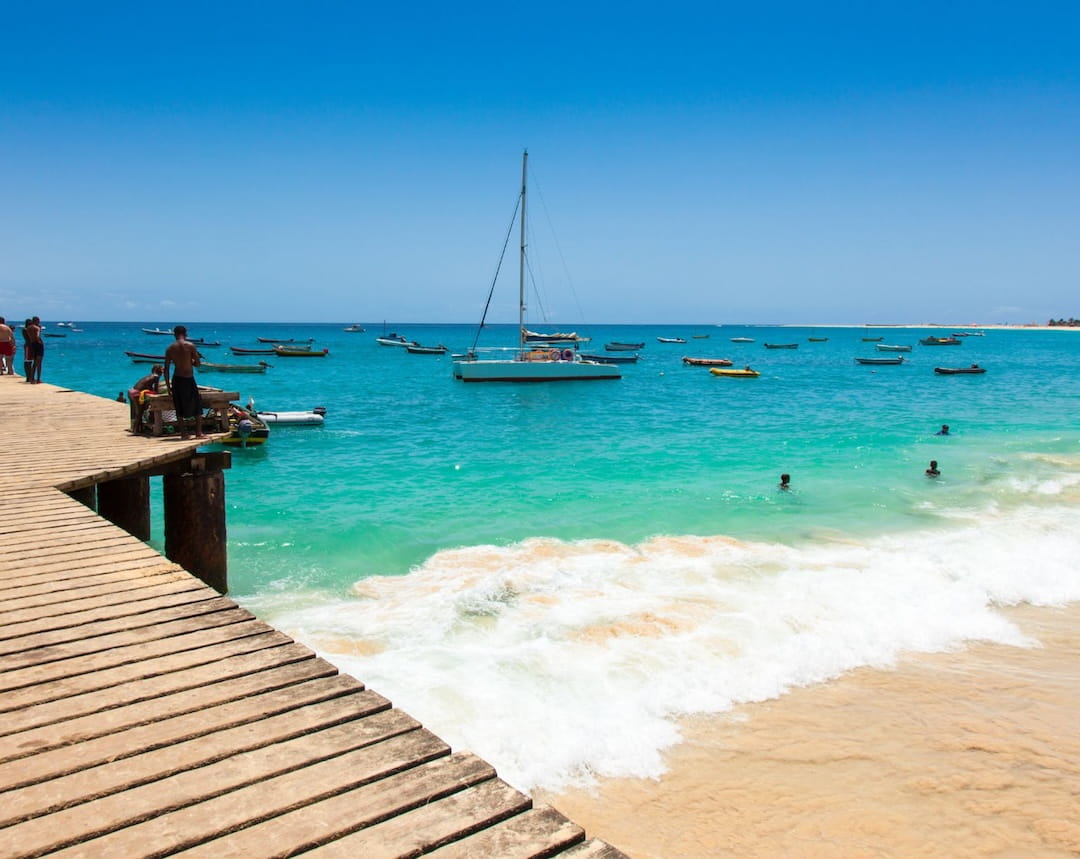
Then comes Santa Maria, a more intimate and welcoming face of Cape Verde. On the small pier, fishermen return from the ocean and display their catch of the day in an authentic, lively atmosphere. Just a few steps away are lanes lined with brightly colored houses, where time seems to slow to the gentle rhythm of Cape Verde.
When the time comes to return to our aircraft and resume our Atlantic crossing, we will leave Sal with memories of volcanic landscapes, light, and the scents of the open sea.
And perhaps we will still hear, like a final whisper from the archipelago, the melancholic notes of morna—this music imbued with saudade—through which Cesária Évora, the unforgettable “barefoot diva”, made its soul known to the whole world.
Cape Verde fades behind us. Ahead of us, on the other side of the Atlantic, Latin America begins.
Days 2–5
Cultural cradle and Afro-Brazilian heartbeat
Flight time: Sal Island – Salvador de Bahia 5h
We leave the Cape Verde islands aboard our privatized aircraft and continue our Atlantic crossing, in the wake of the great navigators of old. Soon, the Brazilian coast comes into view on the horizon: our South American Odyssey can truly begin.
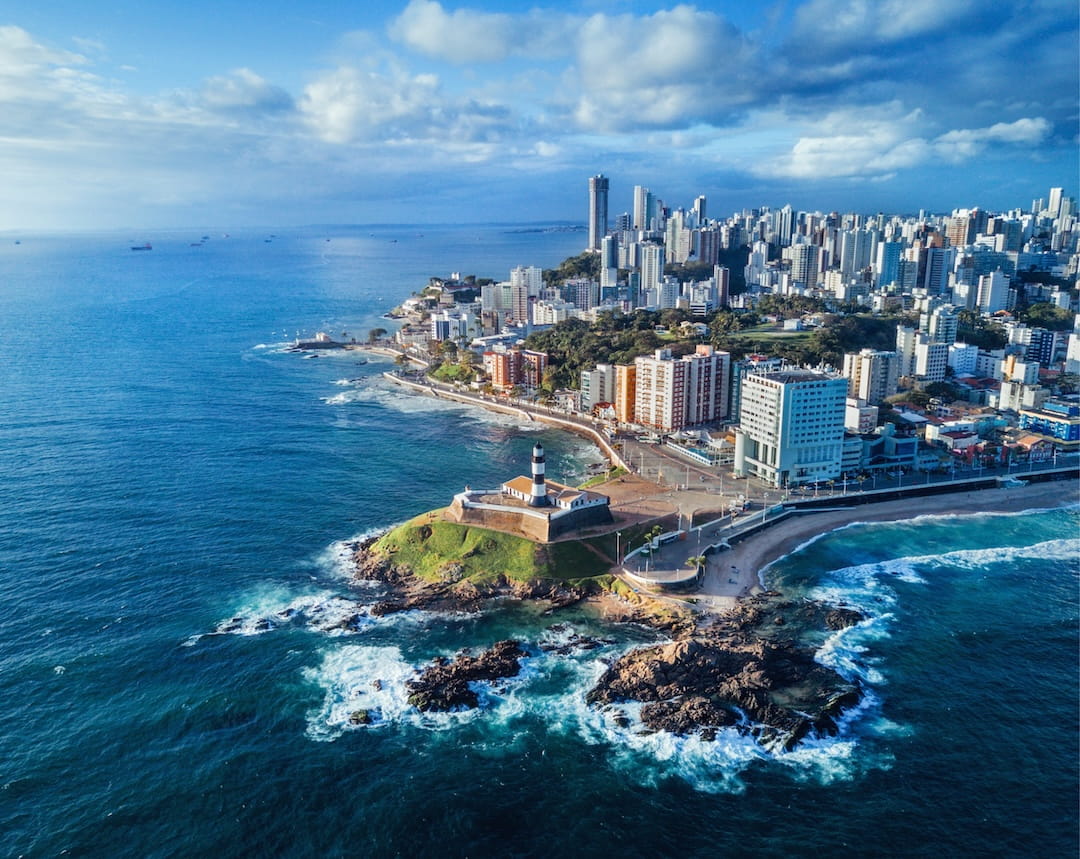
First stop in the New World: Salvador de Bahia, former capital of Brazil and one of the country’s most enchanting cities. Facing the immensity of the ocean, Salvador is a land of cultural blending where African, European, and Amerindian influences have met and intertwined for centuries.
Here, the Afro-Brazilian soul beats with particular intensity. It is expressed in the rhythms of music, in colors, scents, and gastronomy, but also in capoeira, a fascinating meeting of combat, dance, and music born from the history of African populations enslaved. It is also revealed in candomblé, an Afro-Brazilian religion deeply rooted in the spiritual traditions of West Africa.
We will set out to discover Pelourinho, Salvador’s historic heart, listed as a UNESCO World Heritage Site. In this exceptional setting, cobbled lanes wind between elegant colonial mansions with pastel façades, lively squares, and sumptuous Baroque churches. At every turn, Salvador reveals a new face and fragments of its eventful history.
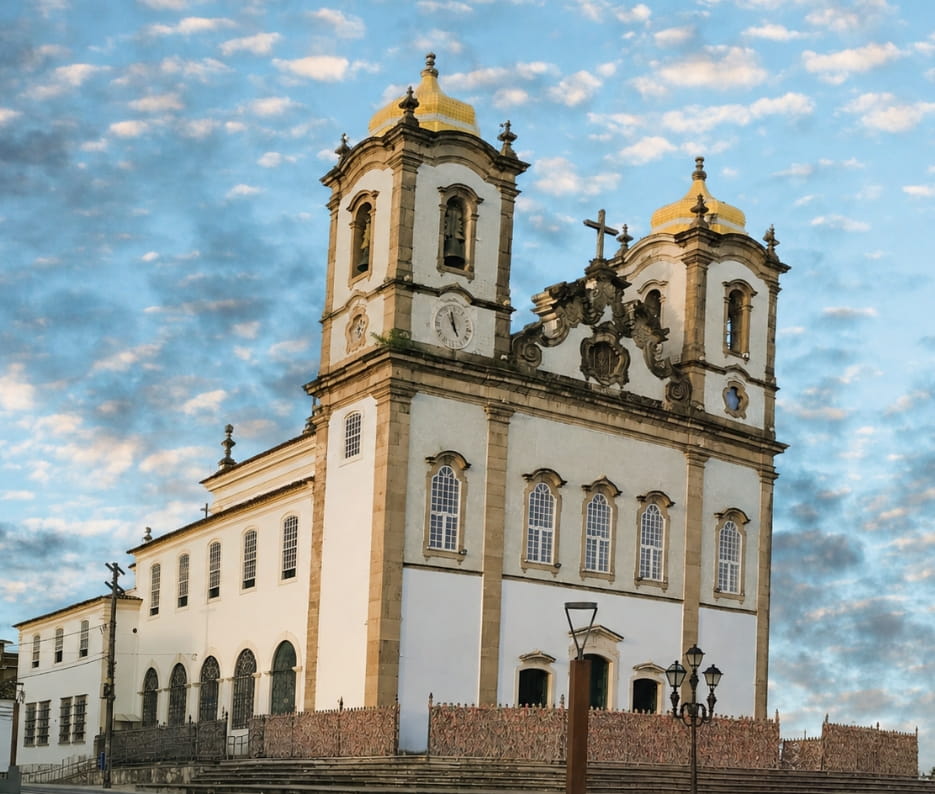
Among its most emblematic sanctuaries, we will discover the famous Igreja do Senhor do Bonfim, a high place of Bahian devotion and a remarkable symbol of the religious syncretism that characterizes the city.
But Salvador is not limited to its monuments or its history. It is felt.
In a smile exchanged at a street corner, in the percussion that suddenly echoes across a square, in the scents of spices and Bahian cuisine, in that gentle way of life that contrasts with the city’s tremendous energy.
Exuberant, mixed, spiritual, and deeply endearing, Salvador de Bahia is not merely visited: it is lived.
And when the time comes to continue our Odyssey, perhaps we will understand why some travelers, arriving here from across the Atlantic, would gladly have dropped anchor here forever…
Day 5
Brasília – Visionary boldness and the architectural genius of Oscar Niemeyer
Flight time: Salvador de Bahia – Brasília 2h

Today, our captain and crew take us into the heart of Brazil’s vastness for a stopover as singular as it is unexpected: Brasília, a monumental, visionary capital that rose almost ex nihilo on the country’s high plateaus.
After the exuberance, colors, and colonial heritage of Salvador de Bahia, we discover a very different face of Brazil: that of modernity and architectural boldness.
The idea of moving the capital inland was longstanding, but it was under President Juscelino Kubitschek, elected in 1955, that this dream truly took shape. His ambition was immense: to build a new capital at the heart of the country and make it the symbol of a Brazil looking to the future. Construction began in 1956 and, less than four years later, Brasília was officially inaugurated on April 21, 1960.
To imagine this extraordinary city, two geniuses of Brazilian architecture joined forces. Lúcio Costa designed the famous Plano Piloto, structured around two main axes that give the city, seen from the sky, a silhouette often compared to an airplane or a bird with outstretched wings. Oscar Niemeyer, for his part, conceived the main public buildings and gave free rein to his extraordinary mastery of curves and concrete.
The result is striking: a capital of monumental perspectives, clean lines, and spectacular buildings, conceived as a true open-air work of art. An architectural audacity that earned it UNESCO World Heritage status as early as 1987.
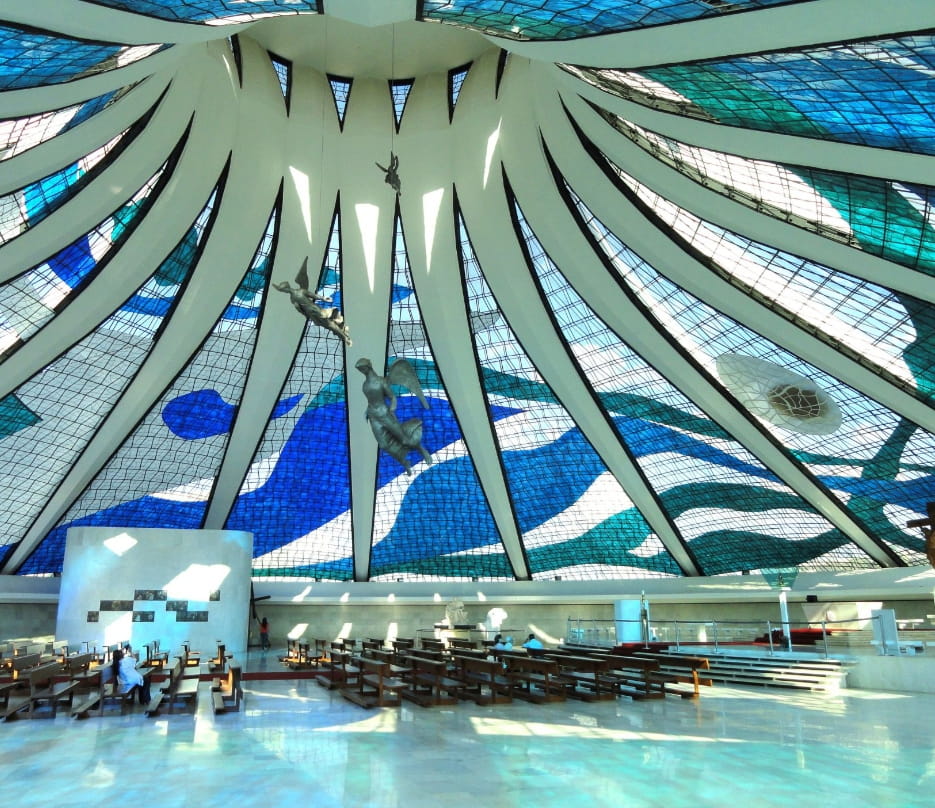
Our discovery will take us in particular to the extraordinary Metropolitan Cathedral of Nossa Senhora Aparecida, one of Niemeyer’s most emblematic creations. Its sixteen concrete columns soar toward the sky like open hands, while its immense glass crown bathes the interior in an almost unreal light, representing Christ’s crown of thorns.
We will then head to the majestic Three Powers Square, the symbolic heart of the Brazilian Republic, around which stand the Palácio do Planalto, seat of the presidency, the National Congress, and the Federal Supreme Court. Here, architecture and power converse in a setting of spectacular proportions.
Brasília unsettles as much as it fascinates. Few cities in the world so clearly reveal the realization of a utopia.
After a lunch of Brazilian flavors, we will return to our aircraft to continue our Odyssey.
We then leave the Brazil of people and their dreams to reach one of the most prodigious spectacles shaped by nature.
In the early evening, we will reach Iguaçu and its legendary falls.
After the work of humankind, it is now nature’s turn…
Days 5–7
Iguaçu Falls – The striking spectacle of the “Great Waters” in the heart of the jungle
Flight time: Brasília – Iguaçu 2h10
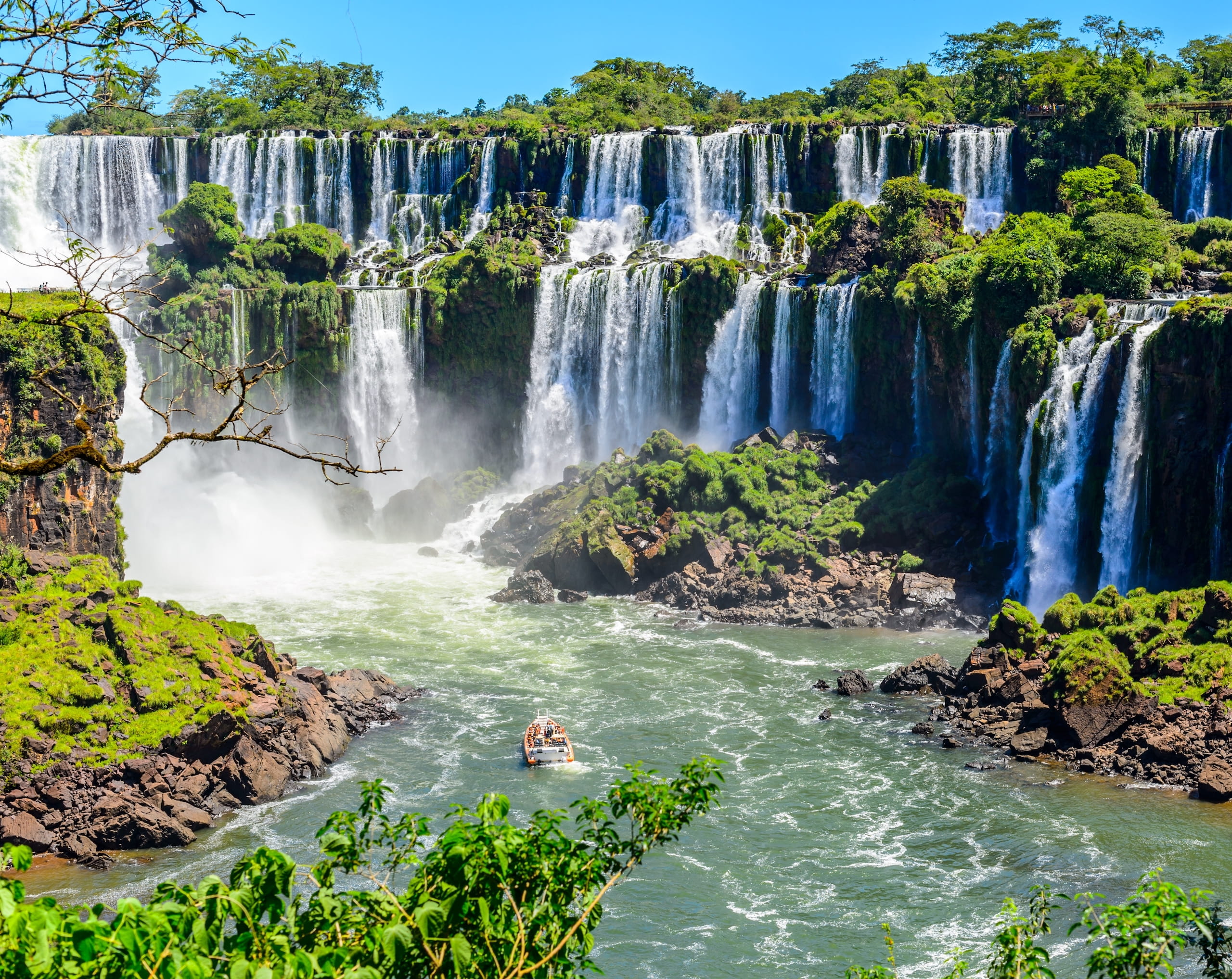
After the architectural boldness of Brasília, our Odyssey leads us to a spectacle of an entirely different scale. Here, humankind fades away, giving way to the sovereign power of nature.
We are in Iguaçu, whose name, inherited from the Guarani language, means “great waters.” Rarely has a name described a place so aptly.
In the heart of an immense subtropical forest suddenly emerges one of the most striking natural spectacles on our planet: the Iguaçu Falls. Nearly 275 cascades follow one another along a front of almost three kilometers, forming between Brazil and Argentina a natural border of extraordinary beauty and grandeur.
Listed as a UNESCO World Heritage Site, the falls cannot be taken in at a single glance: they are discovered, approached, and felt. That is why we will take the time to explore both sides—Brazilian and Argentine—which offer radically different yet perfectly complementary perspectives.
On the Brazilian side, we are offered a masterful view of the whole: an almost endless succession of cascades emerging from an emerald-green mantle of vegetation. Then, along the walkways, we will draw gradually closer to this tremendous mass of water until we can feel its breath and spray.
The Argentine side, for its part, will take us into the very heart of the falls, all the way to the mythical Devil’s Throat — Garganta del Diablo. A gigantic natural amphitheater where vertiginous torrents plunge nearly 80 meters with a deafening roar. Faced with such power, words become almost unnecessary.
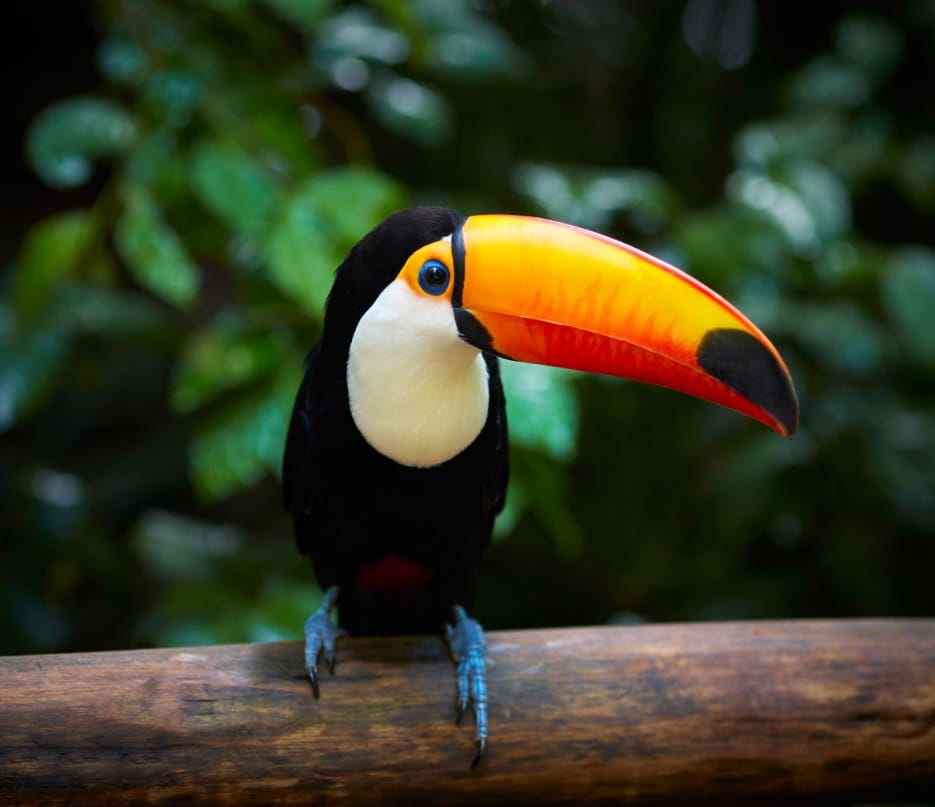
Around us stretches a subtropical forest of exceptional richness. Toucans, coatis, multicolored butterflies, and countless bird species inhabit this lush vegetation, home to thousands of plant species. Here, water and jungle seem to form a single world.
And for those who wish to gain even more altitude, a helicopter flight will offer an absolutely spectacular perspective. Seen from the sky, the forest suddenly seems to open up to reveal this immense network of cascades, finally unveiling the full scale of Iguaçu.
There are landscapes one admires. Others one photographs. Iguaçu belongs to that far rarer category of places one never forgets.
When we return to our aircraft to continue the Odyssey, we will carry with us the roar of the “Great Waters,” the spray on our faces, and that fleeting sensation of having contemplated one of nature’s most extraordinary works.
Days 7–10
Between Haussmann-style boulevards and the spellbinding rhythms of tango
Flight time: Iguaçu – Buenos Aires 2h00
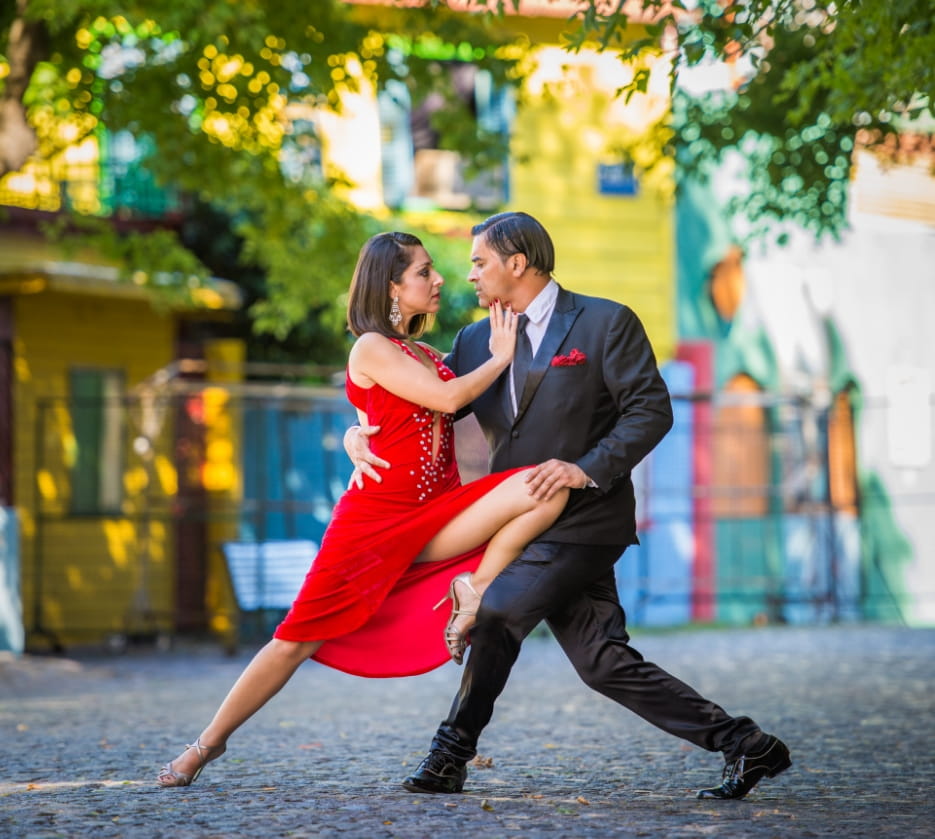
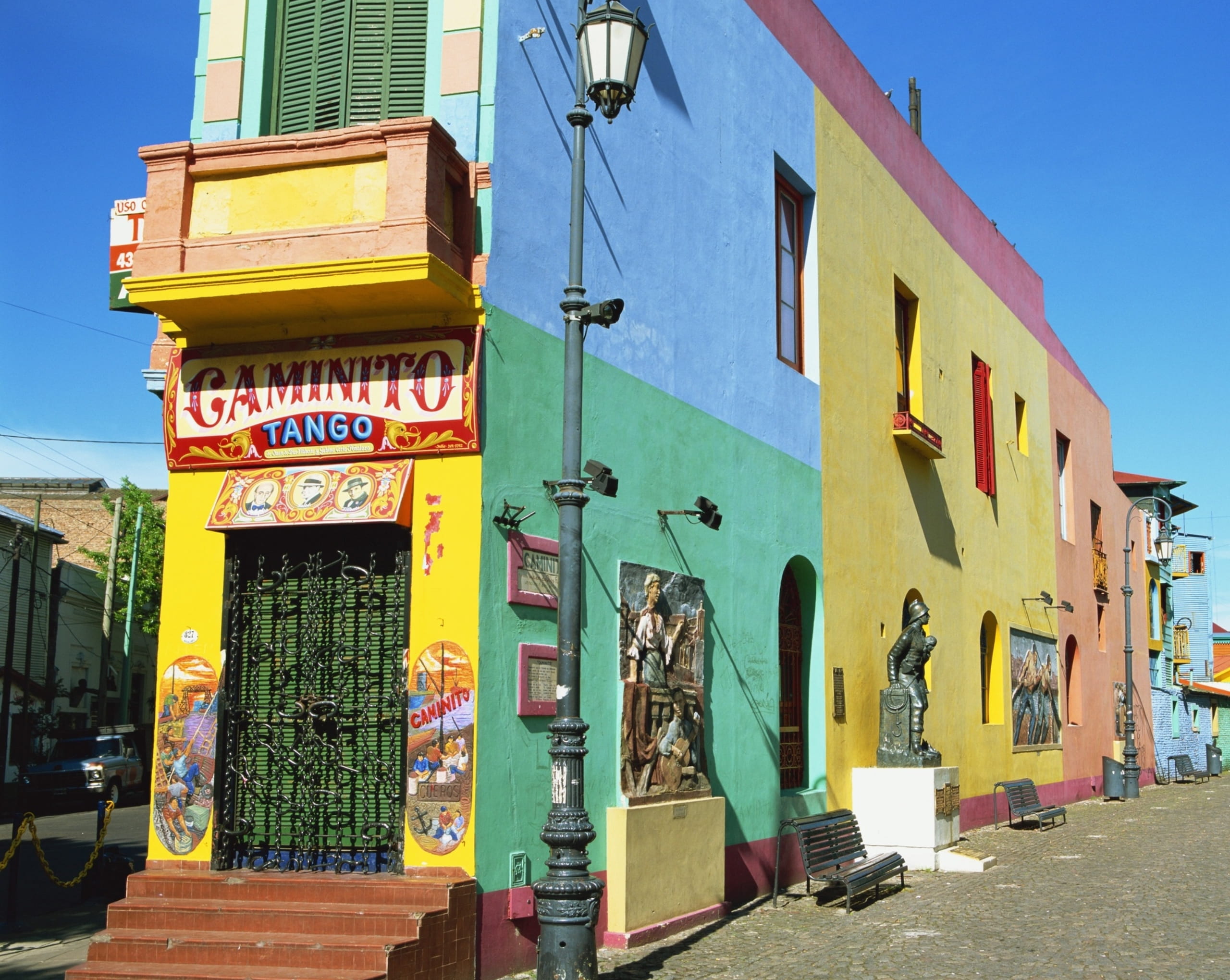
We leave the wild luxuriance of Iguaçu and return to our metal bird. A few hours later, the scenery changes: Buenos Aires appears—vast and elegant—set on the banks of the Río de la Plata.
Welcome to the city sometimes nicknamed “the Paris of South America.”
Buenos Aires does indeed have something delightfully familiar, yet profoundly exotic. Shaped by great waves of immigration from Spain, Italy, and all over Europe, the Argentine capital is an extraordinary blend of cultures, architecture, and traditions. Its broad avenues, Belle Époque façades, Haussmann-inspired buildings, sumptuous theaters, and historic cafés lend it an almost European elegance. But beneath this apparent restraint beats a resolutely Latin American heart—passionate and sometimes excessive.
Our discovery will begin with the mythical Plaza de Mayo, the historic and political heart of the capital. Facing us stands the famous Casa Rosada, seat of the Argentine presidency.
Buenos Aires also bears the traces of a sometimes painful recent history. The military dictatorship that ruled Argentina from 1976 to 1983 remains deeply etched in the national memory.
We will then discover one of the city’s cultural jewels: the prestigious Teatro Colón, inaugurated in 1908 and considered one of the great international opera houses.
Then we will change atmosphere entirely as we head to the La Boca district; its vividly colored façades tell another story of Buenos Aires—more bohemian and deeply attached to its roots.
It is also impossible to evoke the Argentine capital without encountering the figure of Eva Perón. The museum dedicated to her will help us better understand the extraordinary destiny of the woman an entire people simply called Evita.
But Buenos Aires is not merely visited. It is lived—and above all, it is lived at night. When the lights come on, another city appears. That is when the first notes of tango resound—this dance born in the working-class neighborhoods of the Río de la Plata, a blend of seduction, nostalgia, and passion that has become one of Argentina’s finest symbols.
For our final evening, we will let ourselves be carried away by this incomparable atmosphere over excellent Argentine beef, perhaps accompanied by a great Malbec, before discovering all the sensuality and elegance of an authentic tango show.
Buenos Aires is like this: European in its elegance, Latin American in its soul, and Argentine to the point of excess.
Tomorrow, our Odyssey will take flight again… but a few notes of bandoneón and a little of Buenos Aires’ passion will remain in our memories for a long time.
Day 10
Port Stanley – An unusual stopover between historical memory and southern wildlife
Flight time: Buenos Aires – Port Stanley 2h40
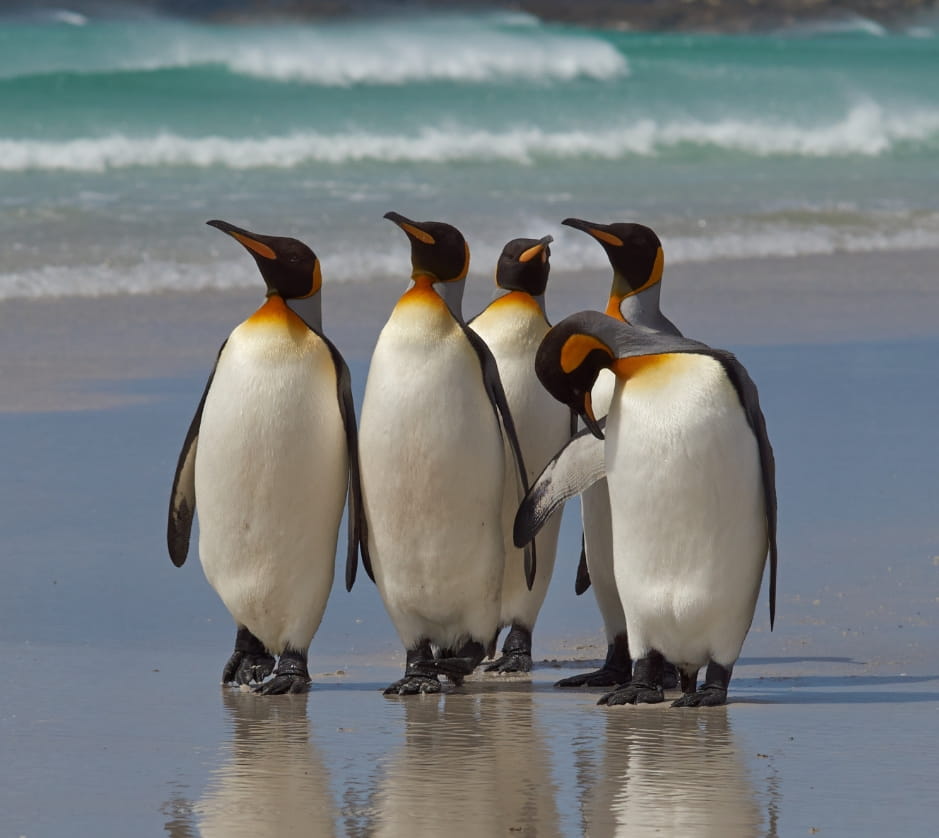
We leave the bustle of Buenos Aires to take off again toward the south. Little by little, land becomes scarce, the Atlantic grows immense, and our Odyssey takes on the air of an expedition.
Soon, before us appears one of the most unusual and exclusive stopovers of our journey: the Falkland Islands, or Islas Malvinas.
Lost in the South Atlantic, several hundred kilometers off the Patagonian coast, this British archipelago offers the striking feeling of having reached a territory at the ends of the earth. Here, landscapes are vast, swept by winds, the coasts deeply indented, and nature reigns almost unchallenged.
Long linked to whaling and seal hunting, then becoming a strategic point for the Royal Navy in the South Atlantic, the Falklands also occupy a singular place in contemporary history. Claimed by Argentina, which calls them Islas Malvinas, they were in 1982 the scene of a brief but particularly intense war between Argentina and the United Kingdom. More than forty years after the conflict, this history remains deeply present in memories and in the landscapes.
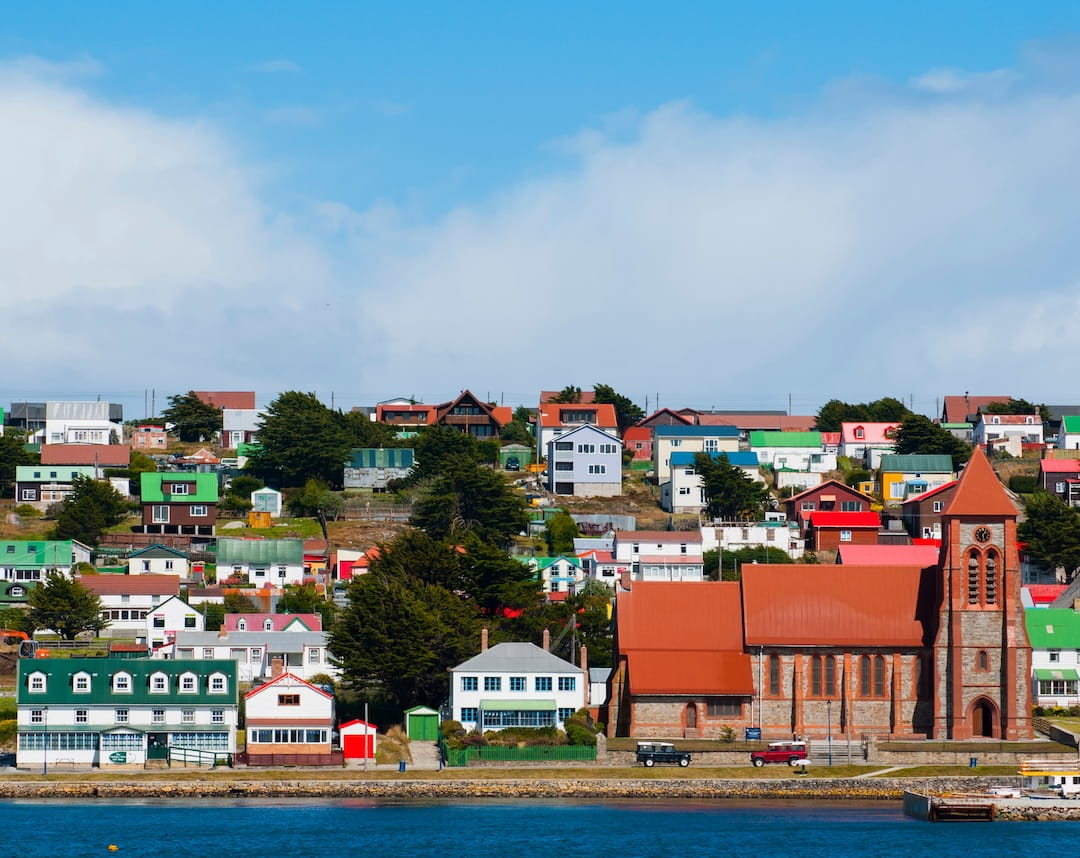
We will then head to Stanley, a tiny capital with a delightfully British charm that sometimes gives the impression that an English village has been transported to the other side of the planet.
We will discover the Historic Dockyard Museum, which recounts the archipelago’s maritime, human, and natural history, as well as Government House, the governor’s residence since the XIXᵉ century.
A few steps away stands Christ Church Cathedral, an Anglican cathedral that has become one of Stanley’s symbols. In the immediate vicinity, the remarkable Whalebone Arch, made of whale jawbones, is a reminder of how closely the history of these islands was once tied to the great mammals of the Southern Ocean.
But the Falklands’ true wealth may lie elsewhere: in their exceptionally well-preserved nature. At Gypsy Cove, amid moorlands and cliffs overlooking the cold waters of the Atlantic, we will set out to meet Magellanic penguins that come here to establish their burrows. Around us, seabirds and wild landscapes create a setting of austere and deeply moving beauty.
Very close to Stanley, Cape Pembroke, the archipelago’s easternmost point, will complete this extraordinary sensation of having reached the end of the world: before us, almost nothing… except the ocean.
Our time in the Falklands will be deliberately brief—only a few hours. And that may be precisely what gives this stopover all its flavor: the rare privilege of landing our aircraft on a land that few travelers will ever have the chance to discover.
Days 10–12
El Calafate – The majesty of Patagonia’s millennia-old glaciers
Flight time: Port Stanley – El Calafete 1h50
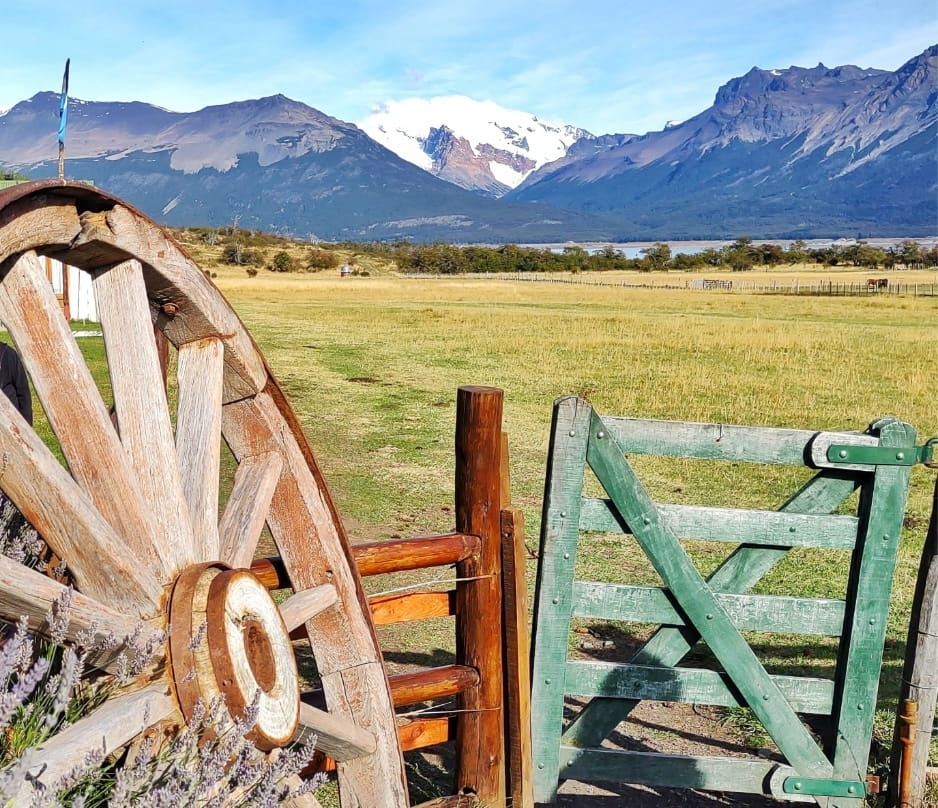
We leave the isolated lands of the Falklands and return to our privatized aircraft to head west. Soon, beneath our wings, appears the immensity of Argentine Patagonia, a legendary territory of endless steppes, mountains, and glaciers.
Our destination: El Calafate, a small town on the shores of Lake Argentino and the privileged gateway to one of South America’s most extraordinary natural sanctuaries: Los Glaciares National Park, a UNESCO World Heritage Site.
Here truly begins the kingdom of ice.
In the heart of landscapes of almost unreal beauty, immense glaciers descend from the Andes to meet the turquoise waters of Patagonia’s great lakes. Among them is one of the most famous glaciers on our planet: Perito Moreno.
When we first catch sight of it, the spectacle will be striking. Before us will rise a gigantic wall of ice whose face emerges nearly 60 meters above the waters of Lake Argentino.
A succession of towers, crevasses, and natural sculptures where light plays across an extraordinary palette of whites, turquoise, and deep blues.
But Perito Moreno is not a static landscape. It is a living giant.
Thanks to a remarkable network of walkways built facing the glacier, we will be able to observe it from different angles and take the time to grasp its immense scale. We must also know how to stop and listen.
For suddenly, in the silence of Patagonia, a deep rumble resounds.
A crack opens, a slab of ice breaks away and collapses into the lake with a spectacular crash. A few seconds later, calm returns, as if nothing had happened.
To extend this exceptional encounter, we will then embark on Lake Argentino, the largest lake in Argentine Patagonia. From its waters, the perspective changes completely: we will sail through a monumental landscape, between mountains, glaciers, and blocks of ice drifting slowly on the surface.
At only 187 meters above sea level, the glacial world of Los Glaciares has a rare feature: it offers landscapes usually reserved for high-mountain expeditions while remaining remarkably accessible. And that may be where all the magic of El Calafate lies.
Here, there is no need to conquer the mountain: the glaciers descend to human level.
When we leave the shores of Lake Argentino, what will remain in memory is the silence of Patagonia’s vast expanses, the cracking of the ice, and above all those shades of blue that are almost impossible to describe.
After reaching lands at the end of the world, our Odyssey has just offered us a face-to-face encounter with one of the planet’s last ice giants.
Days 12–15
The Galápagos – Immersion in the heart of the “cradle of evolution” and a natural sanctuary
Flight time: El Calafate – Guayaquil 7h
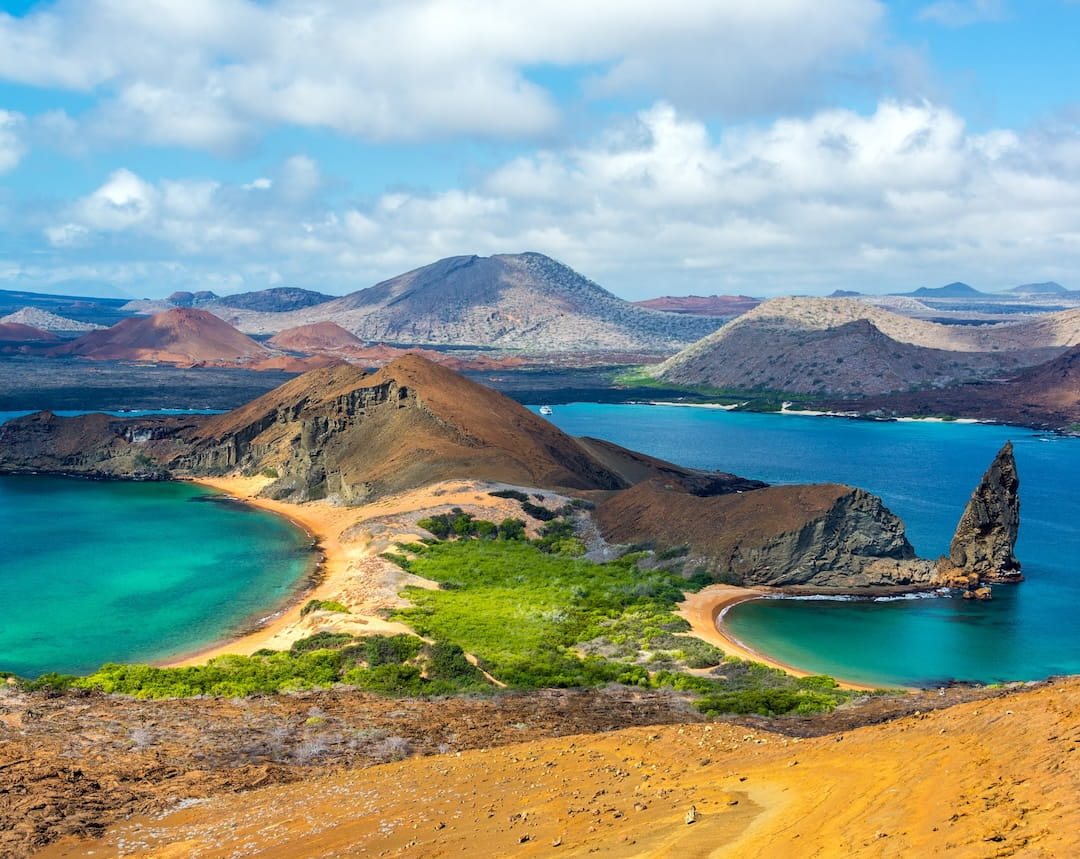

Our Odyssey now takes on a new dimension. After a few hours of flight along the Andes, the captain begins the descent toward the first stage, Guayaquil, the gateway to discovering one of the most fascinating and best-preserved territories on our planet: the Galápagos Islands.
Nearly 1,000 kilometers off the coast of Ecuador, a volcanic archipelago rises in the middle of the ocean, shaped by fire, winds, and marine currents. A scheduled flight takes us to Baltra Island at the heart of these islands, where nature seems to have written its own rules.
Welcome to what one might call the islands of origins.
When Charles Darwin landed in the Galápagos in 1835 aboard the HMS Beagle, he discovered a fauna whose particularities would profoundly nourish his scientific thinking. His observations—especially those concerning variations between species from one island to another—would later contribute to the development of his theory of evolution by natural selection.
Long before Darwin, these isolated lands served as a refuge for pirates, then as a stopover for whalers. The archipelago owes its name to the extraordinary giant tortoises, once designated by the Spanish term galápago, which have now become one of the symbols of these islands.
But in the Galápagos, the exceptional becomes almost everyday.
This extraordinary proximity nevertheless reminds us that we are only guests here. In the Galápagos, it is humankind that must adapt to nature—never the other way around.
Protected by a national park and a vast marine reserve, the archipelago was also one of the very first sites listed as a UNESCO World Heritage Site, in 1978. Its exceptional preservation still makes it an extraordinary open-air natural laboratory today.
On Santa Cruz, we will get close to the famous giant tortoises and discover the Charles Darwin Research Station, dedicated to research and conservation of this unique ecosystem.
We will sail between the islands, walk along trails traced through lava, and observe this extraordinary fauna in its natural environment. At certain moments, the feeling will be almost unsettling: that of discovering Earth before humankind.
The Galápagos are therefore not simply another stop on our journey.
They are a journey within the journey, a timeless interlude where just a few days are enough to transform our view of the living world.
When we return to our aircraft to continue our Odyssey, we will leave behind these volcanic lands lost in the middle of the Pacific with a strange impression: that of having approached, for a few moments, the very origins of the world.
Days 15–17
Bogotá – Goldsmithing treasures and the splendors of the Andean high plateaus
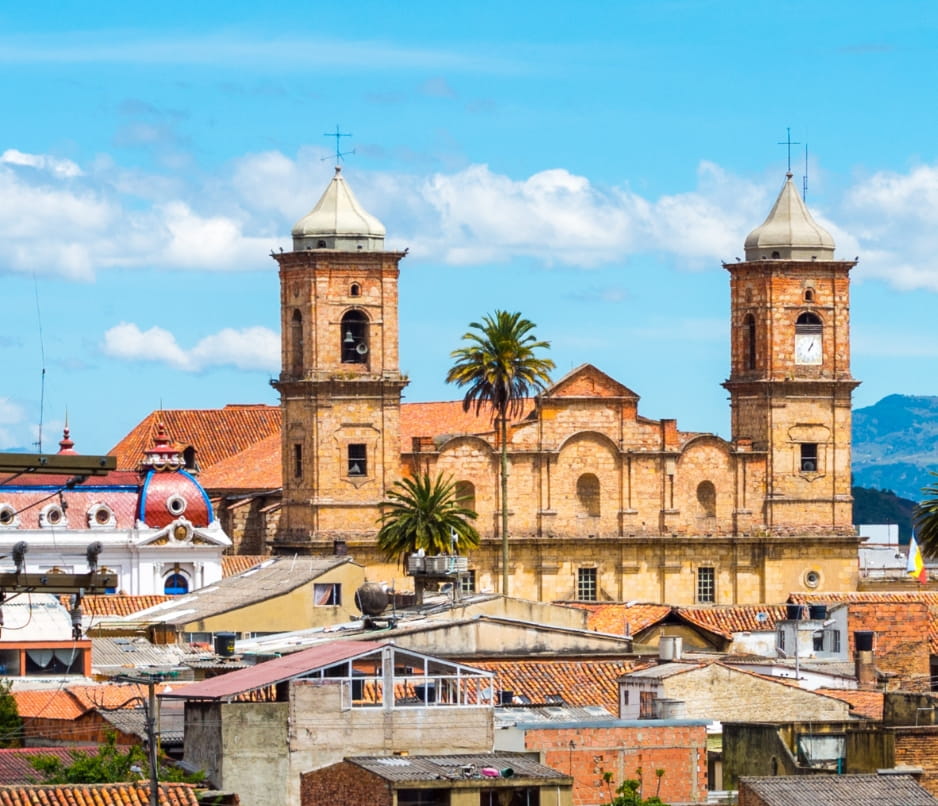
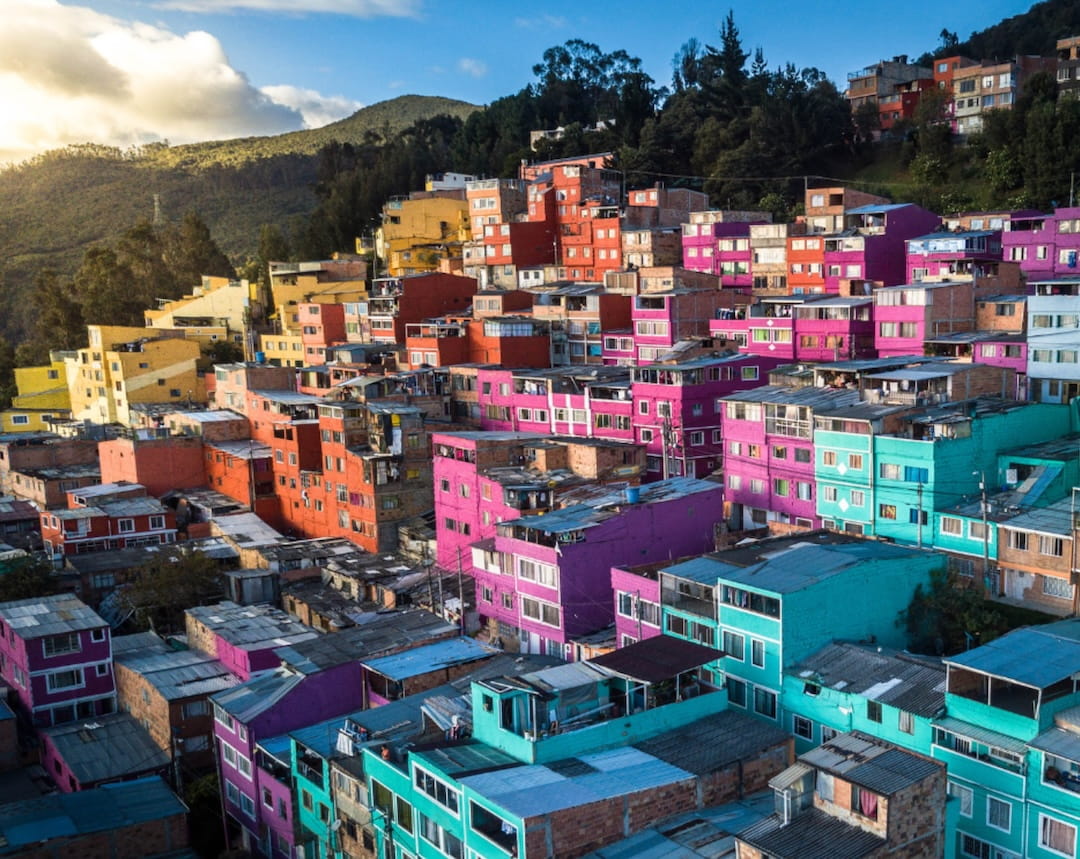
We leave the almost primordial world of the Galápagos and return to our aircraft on the continent. As we approach Colombia, the relief takes shape and the Andes reappear beneath our wings. Our next stop awaits us at 2,640 meters above sea level: Bogotá, one of the highest capitals in the world.
Here, the air is crisper, the light more intense, and the mountains seem to watch over a bustling metropolis of nearly eight million inhabitants. Long overlooked by travelers, Bogotá has established itself as one of Latin America’s great cultural capitals, blending with remarkable energy colonial heritage, pre-Columbian treasures, and contemporary creation.
Our discovery will naturally begin with La Candelaria, the city’s historic heart. Behind its colorful façades and colonial homes lie small squares, secret patios, old churches, and cafés where the unmistakable aroma of Colombian coffee lingers.
At the center of this district opens the majestic Plaza de Bolívar, the true political and historic heart of the capital. Around it stand the Primada Cathedral, the National Capitol, and the Palace of Justice, in a monumental setting dominated by the figure of Simón Bolívar, hero of South American independence.
A few steps will then take us to one of the continent’s most extraordinary museums: the Museo del Oro. It is here that the legend of El Dorado, which made so many European explorers dream, takes on its full meaning.
We will then change worlds entirely at the Botero Museum, housed in an elegant colonial mansion. There we will find the immediately recognizable silhouettes of Fernando Botero,
A museum in his image: generous, surprising, and at times delightfully irreverent.
We will then leave the bustle of the capital to reach one of Colombia’s most unusual places: the Salt Cathedral of Zipaquirá. Buried in the heart of a former mine, this astonishing underground cathedral leads us through a labyrinth of galleries carved into salt rock. Chapels, monumental crosses, and lighting effects create an almost unreal universe where geology, art, and spirituality meet.
Bogotá is made of contrasts. Both monumental and intimate, profoundly Andean and resolutely contemporary, it offers a face of Colombia very different from the images one sometimes thinks one knows.
From the mysterious gold of pre-Columbian civilizations to Botero’s mischievous curves, from the lanes of La Candelaria to the silent depths of Zipaquirá, Bogotá tells us several centuries of history in a single stopover.
Upon departure, we will leave behind this capital suspended between sky and mountains with the feeling of having discovered one of Colombia’s most unexpected and refined faces.
Days 17–20
Havana – Colonial nostalgia and Caribbean vibrancy to the rhythm of salsa
Flight time: Bogotá – Havana 4h20
For the final stop of our Odyssey, we set our course for a mythical Caribbean island: Cuba.
After three weeks of discoveries, grand landscapes, and encounters, it likely took a destination with a soul strong enough to bring this adventure to a close. Havana will be our final rendezvous with Latin America.
Founded by the Spanish at the beginning of the XVIᵉ century, the Cuban capital was for centuries one of the New World’s great strategic ports. From this prestigious past remains an extraordinary architectural heritage where Baroque palaces, colonial mansions, elegant squares, and fortresses recount five centuries of history.
Cuba’s history was also that of a long quest for independence. After several decades of struggle against Spanish domination, the island came under American military administration in 1898, before the establishment of the Republic of Cuba in 1902, under strong U.S. influence. A new chapter opened in 1959, when the revolution led by Fidel Castro and his companions overthrew the regime of Fulgencio Batista and durably changed the country’s destiny. Yet it is far from history books that Havana truly reveals its soul.
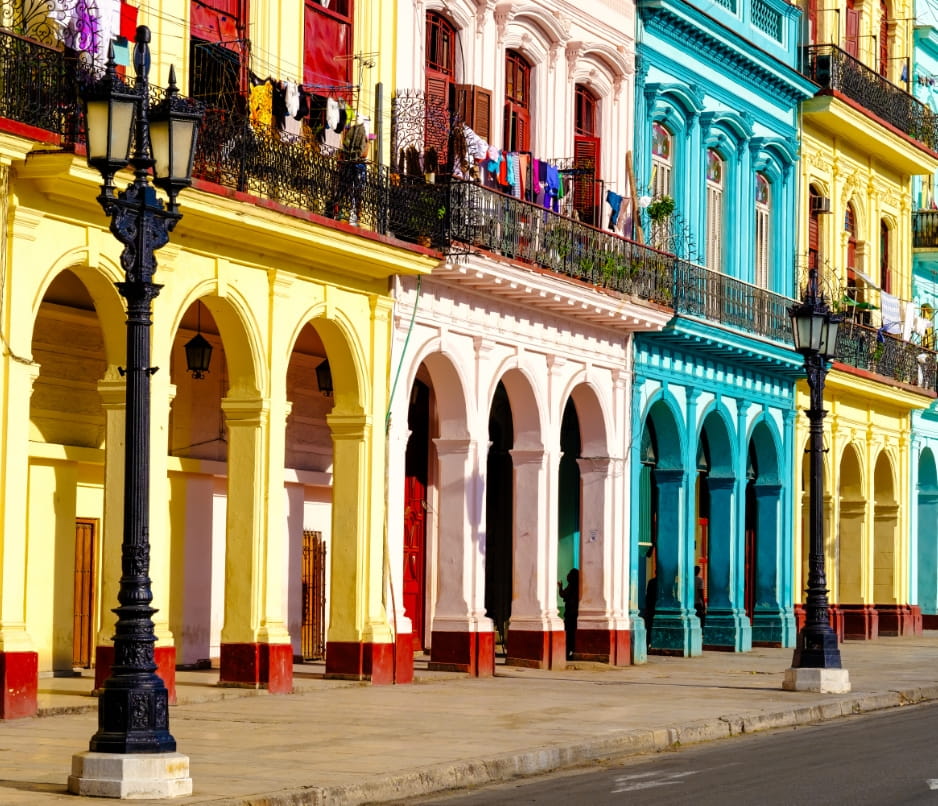
We will set out to discover La Habana Vieja, listed as a UNESCO World Heritage Site. Behind façades weathered by time appear magnificent colonial squares, secret patios, Baroque churches, and former aristocratic residences.
But sometimes it only takes stepping away from the monuments to encounter what matters most. A half-open door lets a few notes of son cubano escape, domino players loudly comment on their game, a cigar slowly burns in the shade of an arcade, while, at the turn of a street, a few guitar chords suddenly ring out.
In Havana, music is never far away.
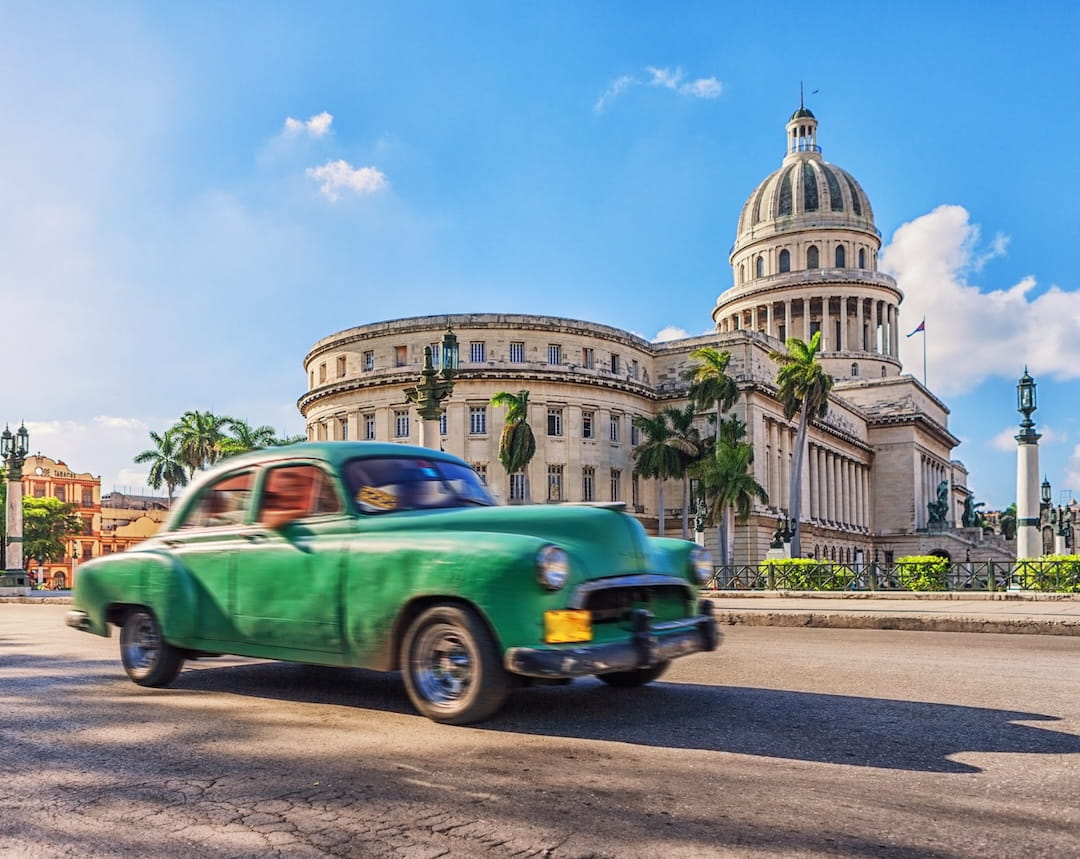
We will then change pace to rediscover one of Cuba’s most emblematic images: the extraordinary American cars of the 1950s. Cadillacs, Chevrolets, Buicks, or Pontiacs in dazzling colors will take us on a timeless ride.
As our discovery unfolds, the memory of the Cuban Revolution will also emerge. Fidel Castro, Ernesto “Che” Guevara, and the great hours of Castroism now belong to history, but their images, their symbols, and their legacy remain omnipresent in the capital.
Cuba fascinates precisely because of these contrasts: splendor and patina, nostalgia and energy, history and carefree spirit, revolution and Caribbean gentleness.
And because such an Odyssey could not end discreetly, our final evening will be in Cuba’s image: warm, festive, and resolutely “caliente”.
To the first notes of salsa, bodies loosen and the celebration begins. A few mojitos or Cuba Libres will accompany this final evening in the tropics, as we perhaps measure the distance traveled since our first stopover in Cape Verde.
Aerial Excellence in the Service of Your Journey
An exceptional partnership with a leading French airline
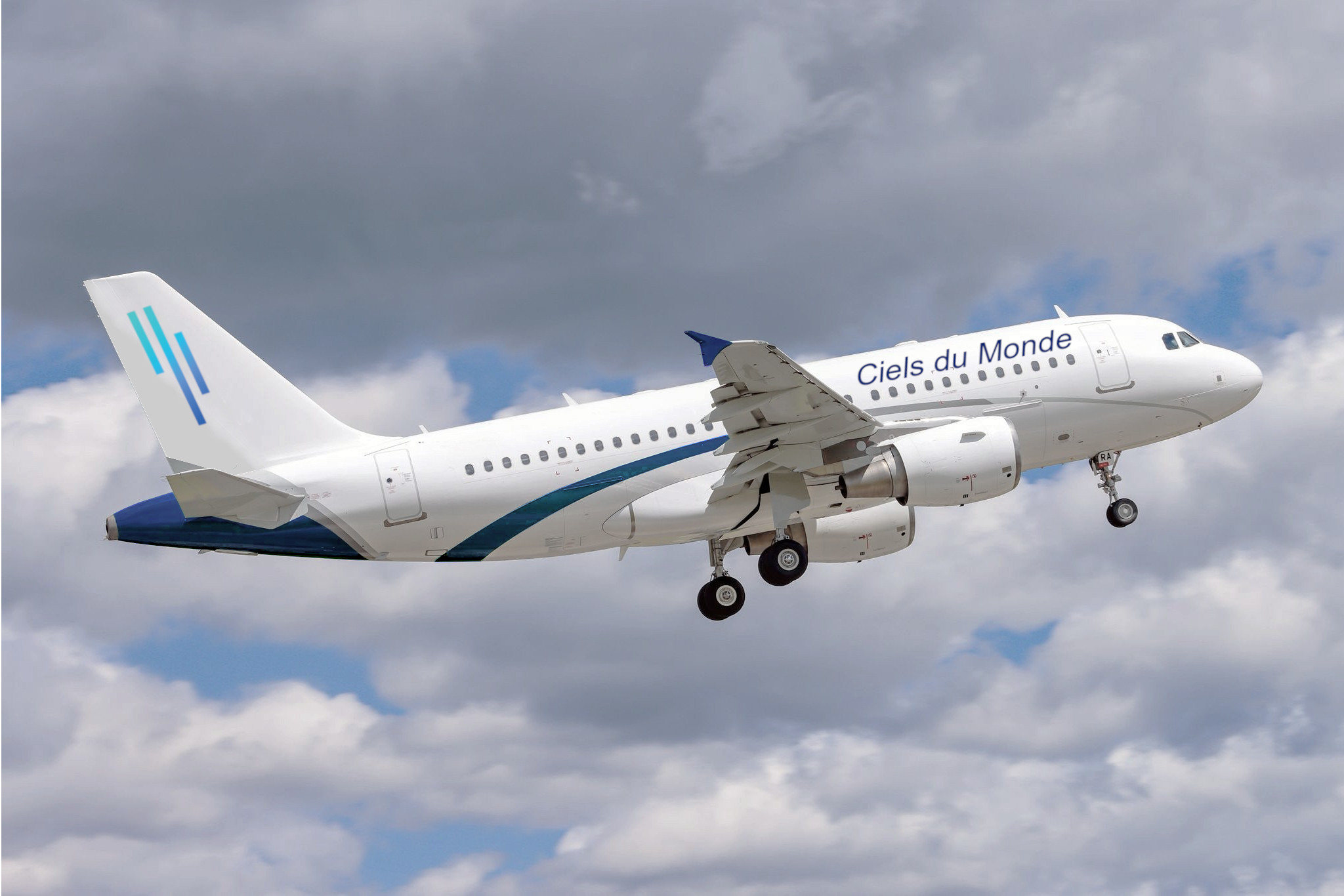
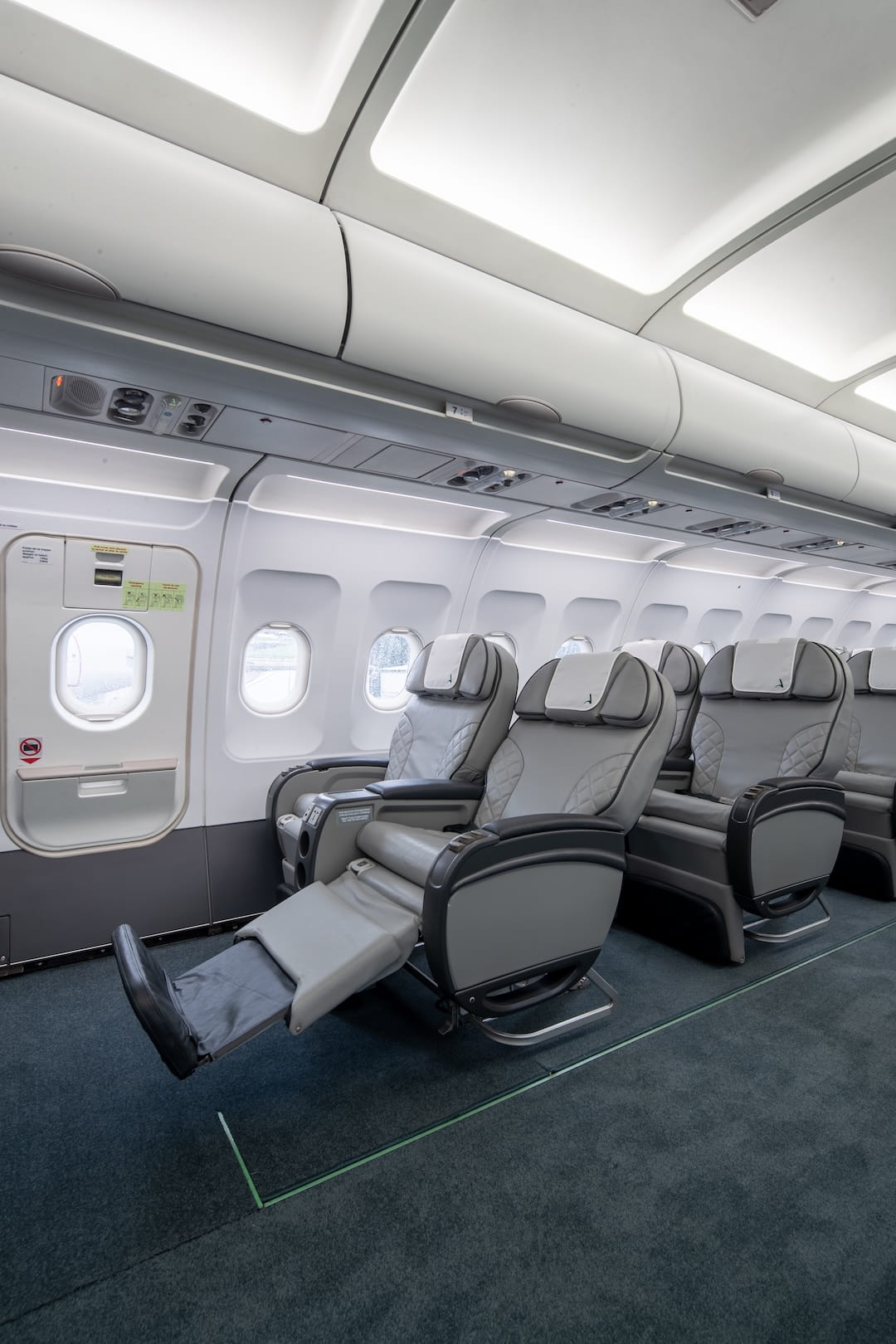
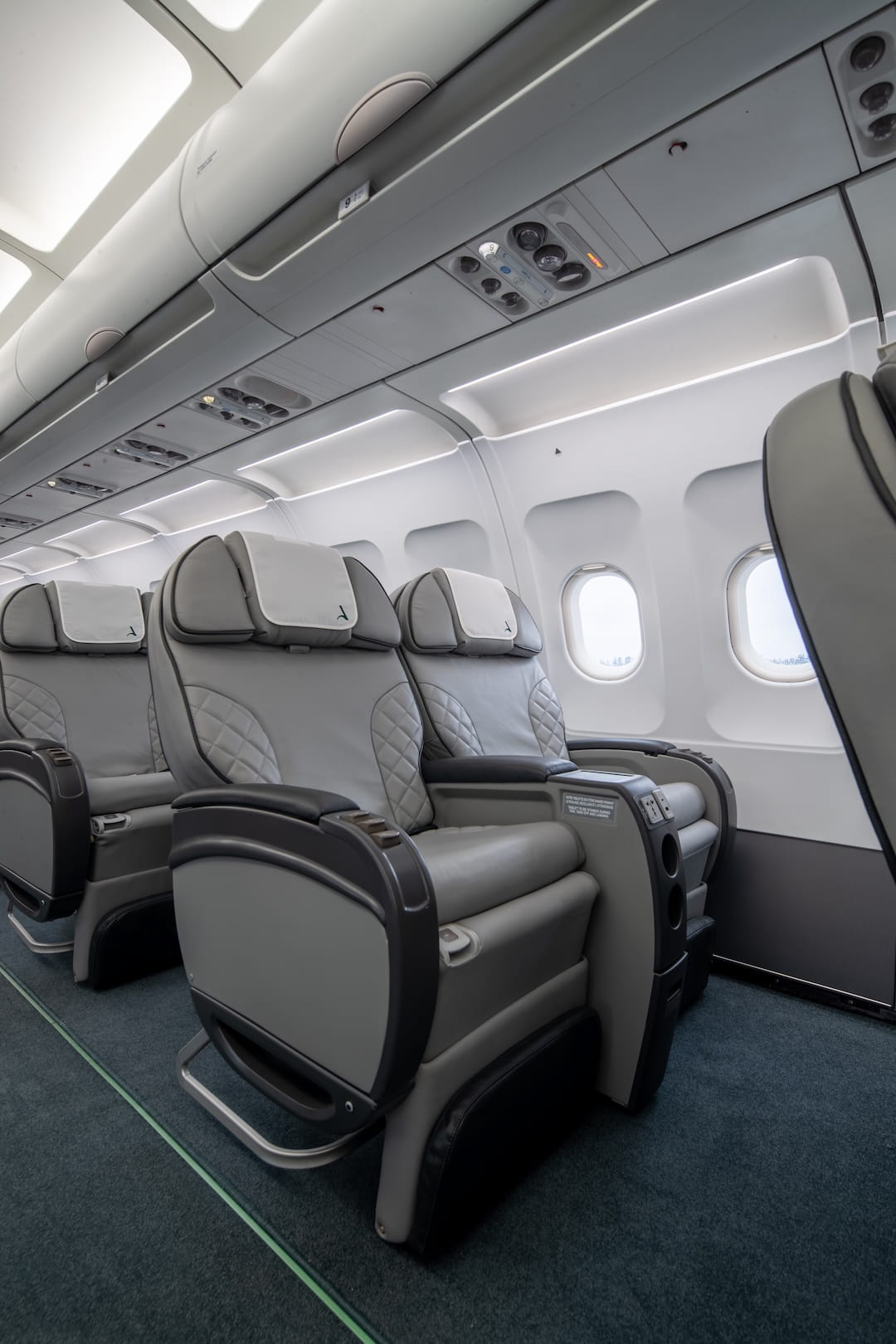
We have chosen to entrust all our air operations to a top-tier French airline, recognized as one of the benchmarks in business aviation. This choice reflects the same high standards and a shared vision of travel: one in which the pleasure of departure begins the moment you take your seat on board, and in which the journey becomes an experience in its own right, just like the destinations visited.
Crews specially trained to the most demanding standards of service, safety, and personalized attention, a carefully appointed cabin, refined catering, and an eye for detail: each flight naturally extends that French art de vivre that we wish to share with you throughout your
journey.
By selecting this partner, we also choose peace of mind. The aircraft is operated under the strictest international certifications, with constant requirements in terms of safety, reliability, and operational quality.
A certain idea of private travel: elegant, seamless, exclusive, and resolutely French.


Accommodation
Stay in carefully selected accommodations around the world, combining comfort and local charm
Carefully selected by the Ciels du Monde team, discover the accommodations for your journey.
Dates & Pricing
Rates for the Latin American Odyssey from March 5 to March 25, 2027
| Services | Sapphire |
|---|---|
|
Price Per Person in double room |
€59,750 |
| Seat configuration: | Business class |
| Onboard service: | 5* luxury |
| Wine cellar: | Luxury selection |
| Accommodation: | 5* Hotels, Luxury & Charm |
| Tour configuration: | Tours in subgroups |
| Single room supplement: | €5,600 |
Guest Reviews
The Ciels du Monde Spirit Through Your Eyes: Tales of Escapes and Suspended Moments


Corporate Social Responsibility
We provide active support to carefully selected local initiatives for their positive environmental impact. We work closely with our local partners to help you discover these destinations through tours designed with nature preservation and respect for local populations in mind. We develop partnerships with international NGOs to deliver medical or school supplies to selected destinations.

Ready to Take Flight?
Download the brochure for this journey now


